
Suspension That Handles Load Without Shifting
Trunnion Shaft Replacement in Lafayette for heavy-duty trucks experiencing suspension sag or alignment drift
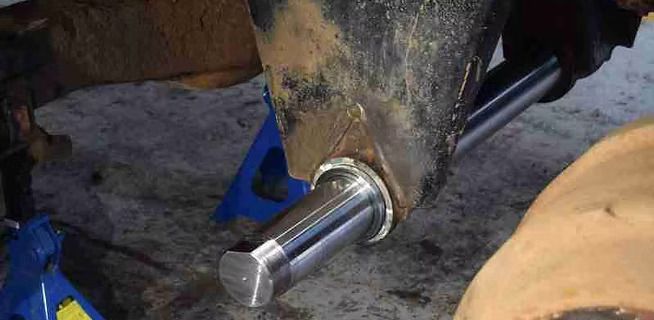
Trunnion shafts connect the axle housing to the suspension, allowing the axle to pivot as the truck travels over uneven terrain while maintaining proper alignment and load distribution. When trunnion shafts wear excessively or fail, the symptoms include suspension sag on one side, axles that shift laterally under load, alignment angles that drift shortly after adjustment, and uneven tire wear despite repeated front-end work. Heavy-duty trucks operating across Louisiana's rough rural roads, logging trails, and oilfield routes wear trunnion shafts faster than highway-only vehicles because the constant articulation and shock loads accelerate bearing wear and shaft deterioration. Axle Surgeons of Lake Charles performs trunnion shaft replacement for commercial trucks and vocational vehicles, restoring suspension stability and eliminating the alignment problems caused by worn or damaged trunnion components.
Replacing worn trunnion shafts involves removing the old shaft assembly, inspecting the trunnion bores in the axle housing for wear or damage, machining worn bores back to specification if necessary, and installing new trunnion shafts with proper torque and lubrication. This work requires specialized knowledge of suspension geometry and the equipment to handle heavy axle components safely. Many truck repair shops lack the expertise or tooling to complete trunnion shaft replacement correctly, which is why fleet managers, owner-operators, logging companies, and contractor shops turn to specialized providers when suspension problems persist despite other repairs.
Schedule trunnion shaft inspection if your truck shows suspension instability or alignment that won't hold.
Why Trunnion Shaft Wear Creates Multiple Problems
Trunnion shaft wear affects more than just suspension comfort. As the shaft develops play, the axle housing shifts during acceleration, braking, and cornering, changing alignment angles dynamically under load. This movement explains why alignments fail to hold, why tires wear unevenly despite proper inflation and rotation, and why steering feels unstable at highway speeds. The problem compounds over time because the excessive movement also accelerates wear on other suspension components, including springs, bushings, and U-bolts. Addressing trunnion shaft wear stops this cascade before additional components require replacement.
After trunnion shaft replacement, the axle housing remains fixed in position relative to the suspension, alignment angles stay consistent over time instead of drifting, and steering response becomes predictable without the vague, wandering feel caused by suspension play. Tire wear patterns return to normal because the axle maintains proper orientation under load, and the suspension handles weight distribution evenly from side to side. For logging trucks, dump trucks, and construction equipment that operate off-highway, these improvements translate directly to reduced tire costs and fewer alignment appointments.
Trunnion shaft replacement can be performed at customer locations when conditions allow mobile service, though some situations require shop-based equipment to support the axle safely during disassembly and installation. The decision depends on vehicle configuration, access to the suspension components, and whether axle housing machine work is needed to restore worn trunnion bores. Regardless of location, the focus remains on precision work that restores suspension geometry and long-term reliability.
Common Questions About This Service
Truck operators across Louisiana often ask about the symptoms of trunnion shaft wear, how the replacement process works, and what causes these components to fail in the first place.
What does a worn trunnion shaft feel like while driving?
Symptoms include steering that wanders and requires constant correction, a loose or vague feeling in the front end, suspension sag on one side, and alignment that drifts out of specification within weeks of adjustment, indicating excessive play in the trunnion assembly.
How do you inspect trunnion shafts for wear?
Inspection involves checking for visible play by prying against the axle housing, measuring shaft diameter and bore condition, and evaluating whether the axle shifts laterally when torque is applied, with any measurable movement indicating that replacement is necessary for stable suspension performance.
Why does trunnion shaft wear happen faster on some trucks?
Trucks operating off-highway on logging roads, construction sites, or oilfield locations experience more suspension articulation and shock loading than highway trucks, accelerating bearing wear and causing faster deterioration of trunnion shaft components throughout the Lake Charles service area.
What's involved in trunnion shaft replacement?
The process includes supporting the axle, removing U-bolts and spring hardware, extracting the worn trunnion shaft, inspecting and potentially machining the trunnion bores in the axle housing, installing new shafts with proper orientation, and torquing all fasteners to manufacturer specifications.
How long does trunnion shaft replacement take?
Replacement time depends on vehicle configuration and whether axle housing machining is required, with most jobs completed within four to eight hours once the vehicle is accessible and replacement parts are on hand.
Axle Surgeons of Lake Charles delivers expert trunnion shaft replacement for heavy-duty commercial vehicles, combining specialized equipment, suspension knowledge, and dependable workmanship to restore stability and eliminate persistent alignment problems. Call to arrange trunnion shaft replacement and stop fighting suspension issues that never seem to stay fixed.